
01 / Architectural form
The architectural line
Begin at the scale of the building. Follow the edges and curves that establish its rhythm, and identify where a line of light can strengthen that rhythm.
Read the form studyFeatured project / Milan
Milan, Italy · 2025. A continuous lighting experience following architectural geometry and connecting spaces.
Explore the architecture, then develop the detail for your own space.
Milan / Cultural architecture
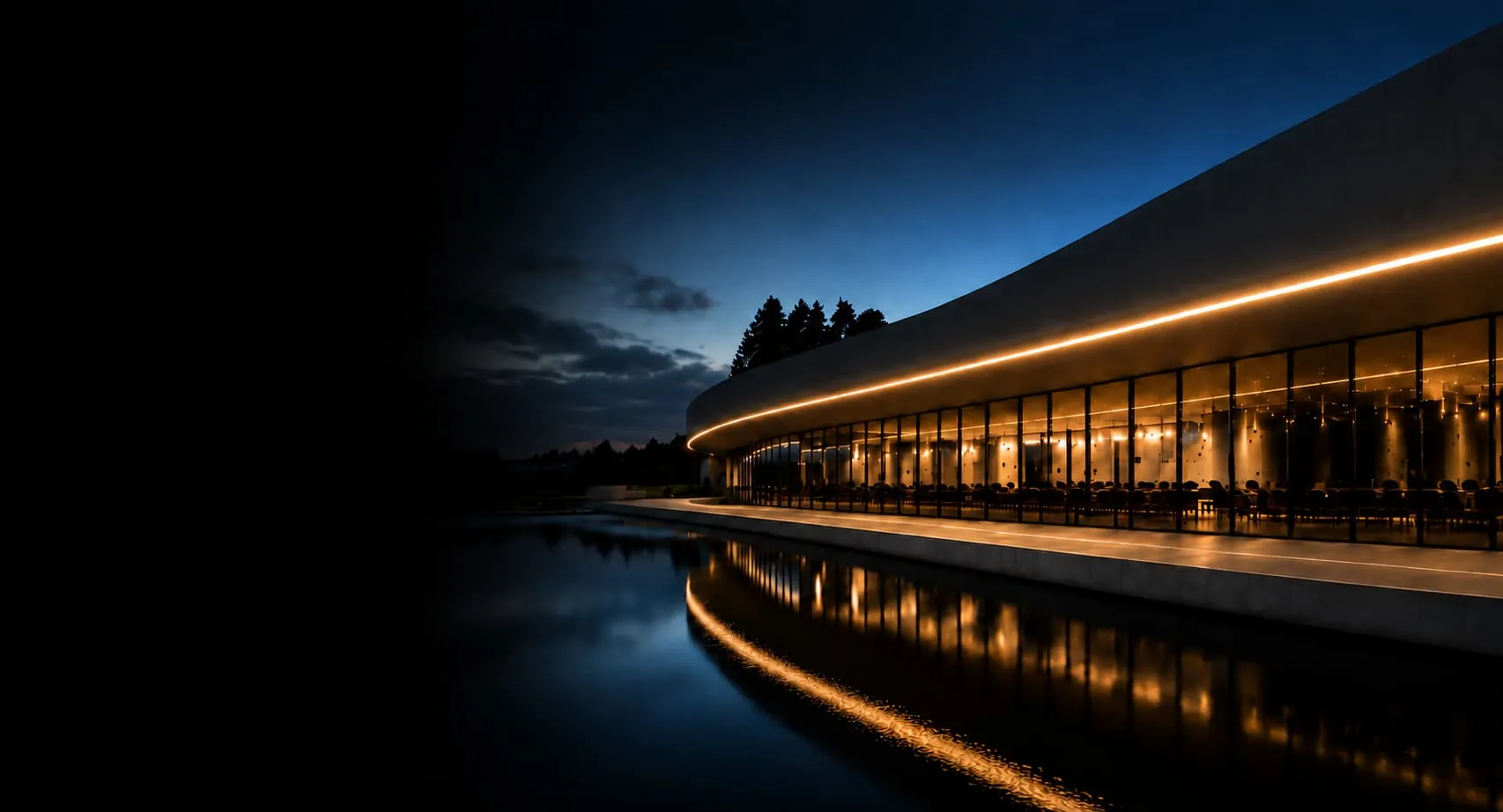
Museum of Light brings the focus to cultural architecture: an 8,800 m² project in Milan, Italy, dated 2025. Architectural linear lighting spans an interior and facade scope.
A continuous line can give separate architectural moments a shared language. An edge becomes a direction; a change in plane becomes a transition. The project’s central idea is the connection between geometry and the experience of moving through space.
That idea offers a useful design starting point: decide which architectural relationships deserve emphasis before deciding how much light to add. A coherent composition leaves room for the building, its materials and the spaces between illuminated elements.
01 / Architectural form
Begin at the scale of the building. Follow the edges and curves that establish its rhythm, and identify where a line of light can strengthen that rhythm.
Read the form study02 / Section detail
Move closer. The junction between light, profile and finish determines whether an intervention feels integrated. Test the section from the viewpoints people will actually occupy.
Read the detail study03 / Landscape route
Step back into the route. Consider the sequence of arrival, movement and pause, and how one illuminated moment relates to the next.
Read the landscape study260+ completed projects. 32 countries worldwide. 18 design partners. 12 lighting applications.
Every new setting brings different geometry, materials and patterns of use. The productive question is how a lighting idea can belong to this particular place: which line to follow, which surface to reveal and which moments to leave quiet.
Next / A focused conversation
Start with a drawing, an image or a question about a difficult detail. Show where the light should sit and describe the experience you want to create.
As the idea develops, bring the section, mounting, power and control into the same conversation. A physical sample in the intended materials helps turn an appealing reference into a precise design decision.